Aaron Lamb, author of upcoming novel, Coffee, Cults and Close Encounters shares his top tips for scene-setting in your novel.
Ever tried to describe a room and ended up sounding like you’re reading from a furniture catalog? Fear not, aspiring novelists! Here are some top tips for you.
- Channel Your Inner Detective Before you start, snoop around! What’s that funky smell? Is there a half-eaten sandwich under the couch? Details, darling—they’re the sprinkles on your scene-setting sundae!
- Use All Five Senses (Six If You’re Psychic) Don’t just tell us what it looks like. What does it sound, smell, taste, and feel like? Is the wallpaper as tacky as it looks? Does Grandma’s perfume make your eyes water? Sensory details are your BFFs!
- Set the Mood, Not Just the Scene Is it a room where dreams come to die, or where unicorns might frolic? The vibe matters! Use words that match the mood—gloomy, bubbly, mysterious. Make that atmosphere thicker than pea soup!
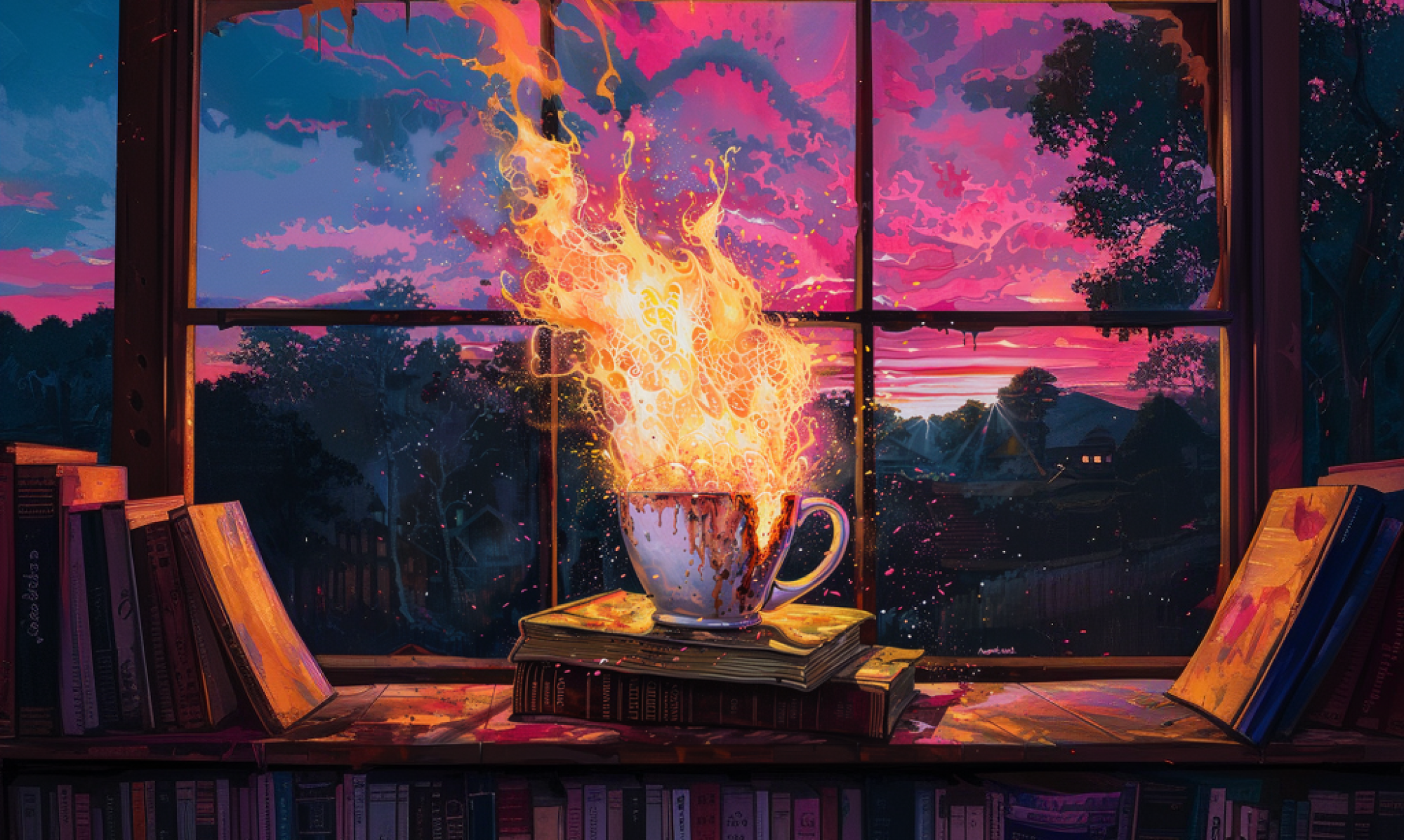
- Think Like a Movie Director Zoom in on that chipped teacup, pan out to the dusty bookshelves. Direct your reader’s gaze like you’re the Spielberg of sentences!
- Sprinkle, Don’t Dump Scene-setting isn’t a data dump. Sprinkle details throughout like fairy dust. A gleaming dagger here, a creaky floorboard there. Keep ’em guessing, keep ’em reading!
- Color Outside the Lines Don’t just say “blue walls.” Is it “midnight-blue like a brooding teenager’s nail polish” or “sky-blue like a kindergartener’s crayon masterpiece”? Get creative, you word-artist!
- Let Characters React Show the scene through your characters’ eyes. “Emma wrinkled her nose at the office’s eau de gym socks.” Now we’re seeing AND judging!
- Contrast is King (or Queen) A gleaming apple on a grimy windowsill, a ray of sunshine in a dusty attic. Contrasts make scenes pop like a disco in a library!
- Time Travels, Too Is it “high noon in a ghost town” or “3 AM in a 24/7 diner”? Time sets a scene as much as place. Make those clock hands your scene-setting sidekicks!
- Have Fun, For Fiction’s Sake! If you’re not enjoying crafting your cardboard castle or describing your hero’s hideously hip apartment, neither will your readers. Have a blast—it’s contagious!
There you have it, future Faulkners! With these tips, you’ll be setting scenes so real, readers will try to book an Airbnb in your novel. Now go forth and paint with words—no smock required!
 Aaron Lamb